
From Granules to Gears: The Core Manufacturing Process
6 de julio de 2026Precision Injection Molded Automotive Components Engineered for High-Volume Production
Have you ever wondered how a car’s dashboard or interior trim can be shaped so precisely and smoothly? Injection molded automotive components solve this by forcing molten plastic into a custom steel mold under high pressure, creating complex, durable parts in seconds. This process offers incredible consistency, allowing manufacturers to produce thousands of identical, lightweight pieces that fit together perfectly without extra machining. To use it, you simply design your part, machine a mold cavity, and inject the melted polymer to form the finished component.
From Granules to Gears: The Core Manufacturing Process
The core manufacturing process for injection molded automotive components begins with granules, typically engineering thermoplastics like nylon or polypropylene. These granules are dried to remove moisture, then fed into a heated barrel where a rotating screw melts and homogenizes the material. The molten plastic is injected at high pressure into a precision-machined steel mold cavity, forming a near-net-shape part such as a dashboard panel or engine cover. The part is held under pressure to compensate for shrinkage, then cooled until it solidifies. The mold opens and ejector pins push the completed component out, after which the cycle repeats. Any sprues or runners are ground and re-pelletized for reuse, completing the granular-to-gear loop.
Material Selection: Thermoplastics vs. Thermosets for Vehicle Parts
Material selection for vehicle parts hinges on distinguishing thermoplastics from thermosets. Thermoplastics, like polypropylene and nylon, soften upon reheating, allowing for recycling and re-melting of scrap. They are preferred for non-structural interior components due to their impact resistance and ease of injection molding for complex geometries. Thermosets, such as epoxy and phenolic resins, undergo an irreversible chemical cure, creating a rigid, heat-resistant crosslinked structure. They are selected for under-hood parts where dimensional stability under high temperatures is critical. The sequence for decision-making is:
- Assess the part’s thermal exposure; thermosets handle sustained heat above 150°C.
- Evaluate the need for recyclability; thermoplastics allow reprocessing.
- Consider cycle time; thermoplastics cool and solidify faster, boosting production throughput.
Post-use, thermosets cannot be remelted, a fixed trait for permanent-form components.
Tooling Precision: How Mold Design Affects Fit and Finish
Injection molding automotive components hinges on microscopic tooling precision, where the mold’s steel geometry directly dictates every edge, gap, and surface texture. A design tolerance variance of just a few microns can transform a seamless dashboard panel into a glaringly misaligned, squeak-prone part. The mold’s cooling channel layout must be equally precise, preventing warpage that would ruin fit against adjoining trim. Sophisticated venting prevents burn marks and ensures a flawless, Class-A surface finish, eliminating the need for costly post-processing and guaranteeing that every gear and bezel snaps together with exacting, repeatable consistency.
- Gate placement and size control material flow to avoid sink marks and knit lines.
- Polished or textured cavity surfaces directly imprint the desired finish onto the component.
- Draft angles must be exact to prevent ejection deformation plastic injection molding automotive parts and maintain dimensional accuracy.
- Tightly maintained parting lines prevent flash, ensuring clean edges for seamless assembly.
Cycle Time Optimization: Balancing Speed with Part Quality
Injection molding automotive components demands a ruthless focus on cycle time optimization, where every second shaved must be justified against dimensional integrity. Rushing cooling causes warpage in complex geometries like intake manifolds; prolonging it sacrifices throughput. The balance lies in conformal cooling channel design, which extracts heat uniformly, allowing faster ejection without sink marks. Simultaneously, precise injection velocity profiling prevents shear-induced degradation in filled polymers, maintaining impact resistance. The real skill is identifying the thermal equilibrium—the exact moment when the part is rigid enough to eject but not so cold that mold condensation compromises surface finish. This split-second decision defines production efficiency.
In-Mold Assembly Techniques for Multifunctional Parts
In-mold assembly techniques let you combine multiple components directly during the injection cycle, which is perfect for making multifunctional automotive parts. You can insert metal threads, sensors, or living hinges without secondary operations, saving time and reducing errors. For example, a single shot might produce a dashboard panel with integrated clips and a soft-touch overlay. This approach ensures precise alignment of moving elements right out of the mold.
Under the Hood: Powertrain and Engine Bay Applications
Under the hood, injection molded components tackle brutal heat and constant vibration. You’ll find glass-filled nylon oil pans and valve covers that resist warping better than metal, while high-temp PPS intake manifolds shrug off underhood bake cycles. These parts also save significant weight, helping reduce front-end inertia. It’s worth noting that molded air intake ducts often integrate baffles and sensor mounts directly, simplifying assembly versus welded metal alternatives. From turbo coolant reservoirs to timing chain guides, injection molding delivers complex geometries that would be impossible to machine, all while sealing against oil and coolant leaks under pressure.
Air Intake Manifolds and Their Weight Reduction Benefits
Injection molded air intake manifolds replace heavy metal castings with engineered thermoplastics, offering a substantial reduction in overall engine bay mass. This weight reduction benefits vehicle fuel efficiency and handling by lowering the front-axle load. The seamless molding process integrates complex internal runner geometries and mounting bosses, eliminating secondary assembly hardware. Optimizing wall thickness through finite element analysis can achieve strength parity with aluminum while shedding over 40% of the component’s weight. Such manifolds also reduce thermal conductivity, maintaining cooler charge air temperatures for denser combustion without additional insulation.
Oil Pans and Fluid Reservoirs Resistant to Heat and Chemicals
Under the hood, injection-molded oil pans and fluid reservoirs must resist extreme heat and aggressive chemicals like engine oil and coolant without degrading. These components leverage advanced polymers that withstand continuous thermal cycling and direct chemical exposure, ensuring no leaks or warping over the vehicle’s life. The precise molding process creates complex internal baffles and integral mounting points, reducing weight compared to metal while enhancing durability. High-temperature resin formulations are critical here, as they prevent brittleness from hot oil and cracking from thermal shock.
Q: How do injection-molded fluid reservoirs handle constant contact with hot, corrosive engine fluids? They use chemically stabilized polymers that resist swelling or softening, maintaining seal integrity and dimensional stability even under prolonged heat exposure above 150°C.
Valve Covers and Timing Belt Components
Under the hood, injection molded valve covers and timing belt components replace heavy metal to reduce engine load and improve fuel efficiency. Valve covers, molded from high-temperature nylon, seal against oil leaks while resisting warpage from thermal cycling. Timing belt components—tensioner pulleys, idler rollers, and guides—use glass-reinforced thermoplastics for stiffness and low friction, ensuring precise camshaft synchronization without metal-on-metal wear. These parts also damp vibration and cut production costs.
Are injection molded timing belt components as durable as metal ones? Yes—modern reinforced plastics match metal’s fatigue life while being lighter and quieter, provided they are paired with proper belt-path design.
Engine Mount Brackets and Vibration Dampening Inserts
Under the hood, injection molded engine mount brackets with vibration dampening inserts quietly tame powertrain shake. The plastic bracket is precision-molded to hug metal studs, while the dampening insert—often a soft, rubber-like TPE—sits right where the engine connects to the frame. This setup absorbs road buzz and gear changes before they reach your steering wheel. Because the insert is molded directly into the bracket, it stays put without glue or hardware.
- Molded stud pockets hold engine bolts securely without metal threads.
- The TPE insert can be tuned to damp specific frequencies for a smoother idle.
- Integral ribs on the bracket prevent cracking under torque spikes.
Interior Innovations: Aesthetics, Comfort, and Durability
Injection molding enables interior innovations by directly translating aesthetics, comfort, and durability into tangible surfaces. Complex textures and grain patterns are molded in, eliminating secondary processes and ensuring lasting visual appeal. For comfort, components integrate soft-touch polymers and ergonomic geometries, such as contoured armrests with dual-durometer layers. Durability is inherent; unlike painted or wrapped parts, molded-in color resists fading, scratching, and wear. Q: How does injection molding unify these three aspects? A: By creating a single, monolithic component where premium aesthetics, haptic comfort, and structural toughness are fused from the polymer itself, rather than added later. This triad of inherent resilience makes molded interiors outperform post-finished alternatives over a vehicle’s lifespan.
Dashboard Panels with Soft-Touch and Grain Finishes
Injection molding achieves dashboard panels with soft-touch and grain finishes by combining specialized thermoplastic elastomers (TPEs) with precision-textured mold surfaces. The process begins with a rigid substrate, overmolded with a soft-touch grain-finish skin that bonds chemically during cooling. To ensure tactile consistency and wear resistance, follow this sequence:
- Select a grain pattern negative (e.g., leather or stipple) etched into the cavity side of the mold.
- Inject the substrate material first, then switch to the TPE for the top layer without opening the tooling.
- Control cooling rates within ±2°C to prevent gloss variation across the grain peaks and valleys.
This eliminates post-process coatings, delivering a durable, non-slip surface that resists UV degradation and repeated touch without delamination.
Structural Door Trim and Storage Solutions
Structural door trim integrates load-bearing injection molded polymers to replace separate metal reinforcements, reducing weight while hosting integrated storage nets, map pockets, and bottle holders. Geometric ribbing within the molded substrate prevents flex during side-impact events. Storage solutions such as modular cupholders or retractable bins are snap-fit directly into the trim panel, eliminating secondary fasteners. This monolithic design ensures consistent gap tolerances and acoustic damping, preventing rattles from stored items. A comparison of typical material choices clarifies functional trade-offs:
| Material | Key Benefit in Door Trim | Storage Integration |
|---|---|---|
| Polypropylene (PP) | Impact resistance & low cost | Molded-in net hooks |
| Polyamide (PA) | High structural rigidity | Threaded inserts for heavy bins |
| ABS/PC blend | Class-A surface finish | Seamless pocket liners |
Center Console Systems with Integrated Wiring Channels
Modern center console systems leverage injection molding to create monolithic structures with integrated wiring channels, eliminating secondary harness-routing operations. The mold design incorporates precision core pulls to form smooth, uninterrupted conduits directly into the substrate, allowing cables for USB ports, power outlets, and sensor arrays to be snapped or fed through without clips. A critical sequence ensures structural integrity:
- the substrate is molded with open-channel geometries,
- wiring is laid into these pre-defined paths during final assembly,
- a thin, snap-fit cover plate is installed to conceal and protect the conductors.
This approach reduces assembly time, prevents wire chafing against sharp edges, and maintains the clean, uninterrupted aesthetic demanded in premium cabin interiors.
Ventilation Louvers and Switchgear Housings
Injection molded ventilation louvers and switchgear housings enhance interior durability and tactile precision. For louvers, complex geometries allow directional airflow control while minimizing noise; robust thermoplastics resist warping from prolonged UV exposure and temperature swings. Switchgear housings integrate mounting bosses and snap-fit features for secure assembly, with surface finishes that withstand repeated contact without fading. Both components benefit from mold-in color, eliminating paint peeling and ensuring consistent match with dashboard trim. Material choice prioritizes impact resistance for switchgear and creep resistance for louver vanes, directly supporting long-term cabin comfort and operational feel.
| Aspect | Ventilation Louvers | Switchgear Housings |
|---|---|---|
| Primary material challenge | UV stability & dimensional creep | Impact & scratch resistance |
| Key mold feature | Vane pivot points & airflow channels | Snap-fits & tactile button guides |
| User experience priority | Noise-free, directional air control | Positive haptic feedback & retention |
Exterior Structural and Aesthetic Components
Injection molding delivers exterior structural and aesthetic components that balance lightweight durability with high-gloss, Class-A surface finishes. Grilles, spoilers, and mirror housings are molded from thermoplastics like ABS and PC/ABS, achieving precise panel gaps and complex geometries that metal cannot replicate.
The mold’s surface texture and gate placement directly determine part appearance, eliminating secondary painting for grain or chrome-look finishes.
Integrating stiffening ribs into the tool design reinforces load-bearing areas like bumper fascias without adding weight. These parts resist UV degradation and minor impacts while maintaining dimensional stability across temperature extremes, meeting strict OEM fit-and-finish standards.
Lightweight Fender Liners and Splash Guards
Injection molded lightweight fender liners and splash guards significantly reduce unsprung mass, improving handling and fuel efficiency without sacrificing durability. These components are precisely engineered from advanced polymers to withstand road debris, moisture, and temperature extremes. Their structural ribs and optimized thickness provide superior impact resistance while maintaining a precise fit. The smooth, low-friction surface prevents mud and snow buildup, while the flexibility ensures they resist cracking upon impact. This design also contributes to noise reduction, as the material dampens tire spray and gravel strikes. By integrating these molded parts, you achieve both functional protection and a clean, finished wheel well appearance, directly enhancing the vehicle’s long-term corrosion resistance.
Grille Assemblies and Trim Bezel Systems
In injection-molded automotive components, grille assemblies and trim bezel systems serve as critical front-end aesthetic and protective structures. Grille assemblies are typically molded from tough ASA or PC/ABS blends to withstand impact from road debris while allowing airflow to the radiator. Equally important, trim bezels provide a precise, seamless border around elements like headlamps or fog lights, achieved through tight-tolerance tooling that prevents visible gaps. These parts often incorporate class-A surface finishes directly from the mold, eliminating secondary painting. For both grilles and bezels, optimized gate and runner design minimizes knit lines and sink marks on visible surfaces, ensuring dimensional stability during high-volume production of these complex, multi-curved panels.
Mirror Housings with Aerodynamic Profiles
Mirror housings with aerodynamic profiles are engineered via injection molding to reduce drag and wind noise at highway speeds. The precision of the mold defines the complex, swept-back geometry that channels airflow smoothly along the vehicle’s flank. Sequential molding steps often produce these components: first, a rigid thermoplastic base is formed for structural integrity; second, a painted or color-matched cap is overmolded or assembled for finish. To achieve consistent gap alignment, aerodynamic mirror housings incorporate living hinges or snap-fit features designed directly into the tool. This eliminates secondary fasteners and ensures the profile remains uninterrupted.
- Mold design integrates draft angles and flow leaders to eliminate turbulence-causing weld lines.
- High-gloss, UV-stable resins are selected to prevent surface degradation from airflow exposure.
- Assembly requires zero mechanical fasteners, relying on integrated clips to maintain the continuous aerodynamic surface.
Bumper Fascia and Energy Absorption Inserts
The bumper fascia forms the vehicle’s front and rear aesthetic surface, while the impact-absorbing energy absorption inserts are injection molded behind it to dissipate collision forces. These inserts, typically made from expanded polypropylene or thermoplastic olefins, compress to manage low-speed impacts without structural damage. The fascia material itself offers a Class A finish for paint adhesion, resisting UV and stone-chip degradation. The sequence for optimal performance includes:
- Molding the rigid fascia with thin-wall flow channels for uniform wall thickness.
- Assembling the crushable energy absorber via snap-fit or heat staking behind the fascia.
- Securing the unit to a metal beam for controlled deformation under load.
This dual-component system ensures pedestrian safety and repairability without sacrificing styling complexity.
Electrical and Lighting System Housings
Electrical and lighting system housings for injection molded automotive components are engineered enclosures that protect sensitive electronics and illumination sources from thermal stress, vibration, and moisture. These parts, often molded from high-temperature thermoplastics like PBT or heat-stabilized nylon, integrate precise mounting bosses and lens-retention features.
Dimensional accuracy is critical, as housings must seal against dust and water ingress while dissipating heat from LED drivers.
Mold design incorporates polished cavity surfaces for consistent wall thickness, preventing warpage in thin-section areas around connector ports. Materials are selected for UV resistance and dielectric strength, ensuring long-term reliability under hood or in exterior lamp assemblies.
Headlamp Reflectors and Transparent Lenses
Injection molding produces headlamp reflectors and transparent lenses as paired housings that manage beam projection and light transmission. Reflectors use high-temperature thermoplastics, such as polyetherimide, molded with precise parabolic or faceted geometries to direct light efficiently. Transparent lenses, typically polycarbonate, are molded with optical clarity and UV-stable coatings to resist yellowing and impact. The interface between lens and reflector must be sealed during assembly to prevent moisture ingress, which degrades reflective coatings. Q: Can a lens and reflector be molded as a single part? No, they remain separate components because the reflector requires a metallized internal surface, while the lens needs optical transparency, which no single material can provide simultaneously.
Sensor Mounts and Connectors for ADAS Modules
Within electrical and lighting system housings, ADAS module sensor mounts and connectors must precisely align radar and LiDAR units while protecting critical signal integrity. Injection molded thermoplastics like PBT and PPA provide the dimensional stability to maintain sub-millimeter tolerances for sensor arrays. Connector housings integrate sealed interlocking features to prevent moisture ingress, while integrated strain relief bosses absorb vibration without degrading the electrical contact interface. The mount geometry often includes locating ribs and threaded inserts for repeatable alignment, ensuring that after-market replacement modules maintain the factory-calibrated sensor field of view.
Battery Trays and High-Voltage Component Enclosures
Battery trays and high-voltage component enclosures in electric vehicles rely on injection molding for precise, repeatable geometries. These components are typically molded from flame-retardant, glass-filled nylon or polypropylene to meet strict thermal and electrical insulation requirements. The trays provide structural support and vibrational dampening for heavy battery packs, while enclosures shield sensitive electronics from moisture and debris. Integrating sealing ribs and mounting bosses directly into the mold eliminates secondary assembly steps. These parts must also withstand high-temperature cycling without warping. Advanced material formulations ensure consistent dielectric strength across complex, thin-wall designs.
What are the key material requirements for injection molded high-voltage enclosures? High-voltage enclosures require materials with high dielectric strength, UL 94 V-0 flame resistance, and thermal stability to manage heat dissipation and prevent electrical arcing in crash scenarios.
Relay Box and Fuse Panel Casings
Relay boxes and fuse panel casings keep your car’s electrical system tidy and safe from grime. These injection-molded housings are designed to securely hold relays and fuses while resisting engine heat and vibration. They clip into place with precision, making quick fuse replacements a breeze without needing tools. The plastic casings also protect sensitive circuits from moisture and debris, preventing shorts. Each channel inside is molded to fit a specific fuse or relay size, ensuring a snug, reliable connection every time. No loose parts, no fuss—just a solid, weatherproof home for your vehicle’s critical power distribution.
Advancing Sustainability in Plastic Part Production
Advancing sustainability in plastic part production for injection molded automotive components means shifting to recycled polypropylene from post-consumer bumpers, and bio-based nylon from castor oil. These materials reduce virgin resin demand without compromising crash performance or interior fit. Process-wise, using cavity pressure sensors to shorten cooling cycles cuts energy per part by up to 15%, while gas-assist molding hollows structural brackets to save material. A common question: Can recycled content match virgin specs in load-bearing parts? Yes—if mineral reinforcement is adjusted, tensile strength can stay within 5% of standard grades, making sustainability practical for dashboards and underhood housings.
Post-Consumer Recycled Resins for Interior Trim
Post-consumer recycled resins for interior trim are engineered to meet stringent automotive standards for low-VOC emissions and thermal stability. The material selection process begins with feedstock sorting to eliminate contaminants, ensuring melt flow consistency during injection molding. These resins are formulated with reinforced PP compounds to match the stiffness and impact resistance of virgin materials. Processing requires adjusted mold temperatures and cooling cycles to mitigate warpage from variable polymer chain lengths. Common applications include door panels and center consoles, where surface aesthetics are maintained through tailored pigmentation and texture molding.
- Verify material certification for closed-loop recycling compatibility.
- Optimize gate location to reduce flow-induced stress in thin-wall trim sections.
- Conduct post-mold aging tests to confirm weld line durability under sun load.
Lightweighting Gains as a Tool for Fuel Efficiency
Injection molded components achieve vehicle mass reduction through part consolidation by replacing multiple metal assemblies with single, thin-walled plastic structures. This directly lowers the energy required to accelerate and decelerate the vehicle, improving miles per gallon regardless of powertrain type. Strategic use of foaming agents or glass-filled polymers in structural brackets, intake manifolds, and door modules trims weight without sacrificing crashworthiness. Every kilogram subtracted from a component reduces the engine load during real-world driving cycles, making fuel efficiency gains a practical, tangible outcome of material and design decisions.
- Replaces heavy metal brackets with hollow-core plastic equivalents
- Allows thinner wall sections while maintaining structural rigidity
- Reduces rotational inertia in moving components like pulleys and fans
Closed-Loop Scrap Reuse in Manufacturing Cycles
In injection molding automotive components, closed-loop scrap reuse directly recaptures runners, sprues, and defective parts, regrinding them into feedstock for the same production cycle. This eliminates virgin material demand for non-critical interior brackets or under-hood housings. By maintaining strict contamination controls and consistent regrind ratios (typically 15–30%), manufacturers preserve mechanical properties while slashing waste. In-process recycling thus ensures every granule stays within the factory’s control, reducing raw material costs and environmental burden without compromising part integrity.
Q: How does closed-loop scrap reuse differ from traditional recycling in automotive molding?
A: Unlike open-loop systems that downcycle material into lower-grade products, closed-loop reuse keeps scrap within the same manufacturing cycle—regrinding and remolding it directly into identical automotive components, preserving performance specifications and reducing supply chain dependencies.
Bio-Based Polymers Gaining Ground in Non-Structural Roles
Bio-based polymers are increasingly specified for non-structural automotive parts, such as interior trim panels, air vent louvers, and mirror housings. Renewable feedstock integration allows these materials to deliver the necessary stiffness and dimensional stability for snap-fit assemblies without compromising cycle times. Molders pair PLA or PHA blends with traditional polypropylene in cavity-specific shots, achieving a seamless bond during overmolding. These polymers also provide a tactile, matte finish that reduces post-process painting, simplifying production. By replacing fossil-based resins in non-load-bearing applications, manufacturers directly lower the carbon footprint of each component while maintaining mechanical performance in everyday thermal and UV exposure conditions.
Quality Control and Testing Protocols
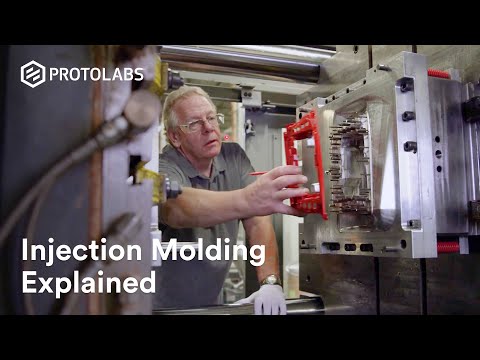
For injection molded automotive components, quality control starts with first article inspection using CMMs to verify critical dimensions against CAD data before production ramps up. During runs, automated in-line vision systems catch flash, sink marks, or short shots in real time, while robotic pullers perform statistical process control on part weight and cycle time every few cycles. A key protocol is testing plaques from each cavity to measure tensile strength and impact resistance, ensuring material consistency batch to batch. Leak tests at 90 psi are common for fluid-handling parts like connectors or housings, but you don’t always need them for cosmetic trim pieces. Dimensional gauging and function-fit checks in thermal chambers confirm parts survive under-hood heat without warping.
Dimensional Verification Using Laser Scanning
Dimensional verification using laser scanning generates a high-density point cloud of the injection molded automotive component, enabling non-contact geometric analysis. The process begins with 3D scanning the part against its CAD model, followed by a deviation analysis to map surface tolerances. A systematic sequence ensures complete validation:
- Position the component on a rotary stage to capture all undercuts and complex contours.
- Register overlapping scans using iterative closest point algorithms to form a unified mesh.
- Compare the mesh to nominal geometry, flagging areas exceeding specified tolerances like warpage or sink marks.
- Report critical dimensions such as mounting hole positions or seal surfaces through color-mapped deviation plots.
This method captures subtle deformations from cooling or ejection that fixed CMM probes may miss, directly correlating scan data to assembly fit requirements.
Impact and Temperature Cycling Tests
Impact and temperature cycling tests simulate real-world abuse on injection molded automotive components. For impact tests, a pendulum or falling dart strikes the part at specific energy levels to measure fracture resistance. Temperature cycling then forces the component through rapid shifts from -40°C to 120°C, exposing thermal expansion mismatches between plastic and metal inserts. This sequence reveals hidden weaknesses:
- Sub-zero freezing checks brittleness of the polymer matrix.
- High-heat soak tests warping and seal integrity.
- Rapid ramp rates stress weld lines and interlayer bonds until failure or pass.
The process ensures parts survive parking lot extremes and road debris strikes without cracking.
Chemical Resistance Ratings for Underhood Exposure
For underhood exposure, chemical resistance ratings are your real-world armor against oils, coolants, and battery acid. We dunk test coupons in fluids at specific temps to simulate years of splash and vapor attack. A rating like «excellent» means zero swelling or cracking after immersion. Even a «good» rating might fail if the fluid contains aggressive additives like zinc dialkyldithiophosphate. You want a material’s ASTM D543 or ISO 175 data sheet to confirm it laughs off the specific cocktail in your engine bay.
Q: How do chemical resistance ratings account for mixed fluids or temperature spikes under the hood?
A: They don’t always—so we run custom mixtures at cycling temperatures (e.g., -40°C to 150°C) to stress-test the part, not just a coupon. Real-world failure often comes from a synergy, not a single fluid rating.
Appearance Standards for Class-A Surfaces

Appearance Standards for Class-A Surfaces within injection molded automotive components demand zero tolerance for flow lines, sink marks, or knit lines. These visible exterior surfaces are graded using a standardized light tunnel or gloss meter, with peak surface quality verified against a master plaque. The protocol enforces precise color-matched gloss levels, typically between 90–95 units on a 60-degree scale, and mandates defect-free texture replication from the mold steel. No polishing or filling is permitted to correct post-mold defects.
- Inspection under multi-directional lighting at a 45–60 cm distance
- Acceptable orange peel value measured by a profilometer (Ra < 0.05 µm)
- Zero visible witness lines on grain surfaces within 10 mm of edges
Emerging Technologies and Future Trends
Emerging technologies in injection molded automotive components are driven by multi-material overmolding and in-mold electronics, enabling seamless integration of sensors and circuits directly into structural plastic parts. Real-time adaptive molding uses AI to self-correct process parameters, eliminating warpage and ensuring micron-level precision for lightweight, high-performance assemblies. Next-generation biocomposite feedstocks and gas-assisted injection will produce hollow, high-strength components that drastically reduce vehicle weight without compromising crash safety. Digital twin simulation now predicts fiber orientation and shrinkage before a single mold is cut, slashing development cycles. These trends directly enable smarter, lighter, and more durable automotive parts that are ready for immediate production.
Multi-Material Overmolding for Seals and Gaskets
Multi-material overmolding lets you bond a flexible elastomer directly onto a rigid plastic carrier in a single production cycle, creating seals and gaskets that won’t shift or leak over time. This eliminates the need for separate assembly steps and secondary adhesives, delivering integrated sealing performance right out of the mold. You can pair a soft TPE or liquid silicone rubber onto a nylon or PBT base, tailoring durometer and chemical resistance for specific fluid or temperature demands. The result is a durable, one-piece component that simplifies installation and reduces potential failure points in automotive applications like connector seals or vibration dampers.
Gas-Assist and Foam Core Processes for Larger Parts
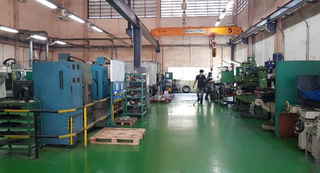
Gas-assist and foam core processes for larger parts enable the production of lightweight, structural automotive components like instrument panel carriers and door modules. Gas-assist injects nitrogen gas into the melt to create hollow channels, reducing material usage and sink marks while improving warp resistance. Foam core processes, such as MuCell, use a supercritical fluid to form a cellular core within thick sections, offering weight reduction and dimensional stability. Both techniques allow for longer flow lengths and lower clamping forces, facilitating the molding of large panels and underbody shields without traditional tooling constraints.
- Gas-assist hollows thick ribs and bosses, cutting cycle times and part weight.
- Foam core processes minimize internal stresses, enhancing flatness in large parts.
- Both reduce part density, aiding fuel efficiency without sacrificing stiffness.
- Eliminate need for multiple components by enabling complex, single-shot designs.
Smart Sensors Integrated During the Molding Phase
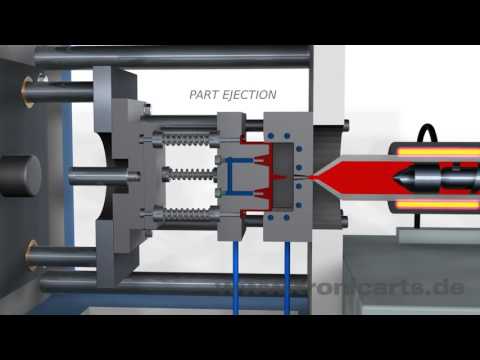
Real-time cavity pressure sensors embedded directly into the mold transform quality control. As plastic fills the tool, these smart sensors capture micro-second data on viscosity and flow front velocity. The system instantly adjusts packing pressure to prevent sink marks or short shots, eliminating scrap before it cools. A typical activation sequence unfolds: the sensor detects a pressure deviation from the baseline, the control unit calculates a corrective injection speed, and the servo valve adjusts flow immediately—all within a single cycle, ensuring each automotive bracket or housing meets spec without post-mold inspection.
Automated In-Line Inspection with Machine Vision
Automated in-line inspection with machine vision is revolutionizing quality control for injection molded automotive components by detecting surface defects like flash, sink marks, and scratches in real-time during production. High-speed deployment of artificial intelligence enables cameras to compare each part against a digital master, rejecting non-conforming units instantly without slowing cycle times. This technology can even identify subtle cosmetic variations invisible to the human eye, ensuring brand-consistent interior trims. By eliminating manual sampling, manufacturers achieve zero-defect throughput for critical safety parts such as airbag housings and dashboard carriers.
- Cameras scan every millimeter of complex geometries under high-temperature molding conditions
- Matching algorithms verify dimensional tolerances against CAD models in microseconds
- Systems log defect types and locations for downstream process tuning
