
Why Your Next Trip Needs a Digital SIM
3 de julio de 2026The Best eSIM for Travel in 2025: A Practical Guide for Every Trip
Most travelers don’t realize that the best eSIM for travel can be set up in under two minutes, long before you board your flight. You just scan a QR code from a provider like Airalo or Holafly, and instantly you have local data rates in your destination without swapping your physical SIM. It keeps you connected for maps, translation, and booking apps while dodging expensive roaming fees, and you can even top up or switch plans from your phone on the go.
Why Your Next Trip Needs a Digital SIM
Forget hunting down local SIM cards or blowing through pricey roaming fees. A digital SIM is the easiest solution for staying connected, especially when you choose the best eSIM for travel. You simply buy a plan online, scan a QR code before you leave, and activate it when you land—no plastic cards or store visits needed. This means you can jump straight into navigating maps or calling a ride share. Just make sure your phone is unlocked, as not all carriers support this freedom yet. It’s the most practical way to keep your main number active while using a local data plan for cheap, fast internet abroad.
How embedded SIMs eliminate physical card hassles
An embedded SIM (eSIM) eliminates the need to physically swap out your carrier’s plastic card each time you cross a border. Instead of juggling tiny chips in an airport terminal or risking losing your primary SIM, you instantly activate a local profile via a QR code or app. Digital SIM provisioning removes the entire process of finding a retail store, inserting a fresh card, and preserving your original chip. The sequence becomes:
- Scan or download the travel eSIM profile on your device.
- Select that profile in your phone’s cellular settings.
- Deactivate it post-trip without removing any hardware.
This direct digital swap prevents your original number from being accidentally deactivated while abroad.
The cost difference between roaming and local plans
Roaming fees from traditional carriers can be exorbitant, often charging per megabyte, while local eSIM plans offer drastically lower rates. For a week in Europe, a carrier’s roaming data could cost over $50, whereas a regional eSIM plan provides similar or more data for under $15. This difference stems from eSIMs connecting you directly to local networks at local prices, bypassing international markup. The core advantage is direct local network pricing, which eliminates unpredictable daily roaming charges.
Q: Is the cost difference between roaming and local plans significant for a short trip?
A: Absolutely; a 5GB roaming package might cost $60, but a local eSIM for the same data often costs under $10, making local plans a clear financial winner.
Instant activation without airport kiosks
Instant activation without airport kiosks means you purchase and install a digital SIM online before departure, enabling connectivity the moment you land. This eliminates hunting for local shops or dealing with queues after a long flight. Airport kiosk bypass saves critical time, especially during tight layovers. Activation typically requires only scanning a QR code or entering an eSIM profile from your booking confirmation.

- Install the eSIM at home over Wi-Fi, ensuring it is ready before travel.
- No physical SIM swap needed; keep your home number active.
- Data begins working immediately upon reaching your destination.
- Avoid roaming charges or expensive airport vendor markups.
Top Factors When Picking a Remote SIM Provider
When picking a remote SIM provider for the best eSIM for travel, prioritize global coverage and network reliability in your specific destinations. A top provider offers instant activation before departure, eliminating local SIM hunts. Crucially, verify transparent pricing with no hidden roaming fees and flexible data top-ups that fit your itinerary length.
The true value lies in a provider that combines a user-friendly app for managing multiple plans with strong customer support accessible via chat, not email, during your travels.
Avoid providers with data throttling after a small cap, as this ruins streaming and navigation. Ultimately, choose an eSIM that lets you stay connected seamlessly, switching networks automatically without complicated setup or surprise charges.
Coverage breadth across continents versus single-country focus
For globe-trotters, global coverage breadth across continents ensures seamless connectivity from Tokyo to Buenos Aires without swapping SIMs, ideal for multi-stop itineraries. Conversely, a single-country focus often delivers cheaper, locally optimized data speeds for deep stays in one nation, like a month in Thailand. Your choice hinges on itinerary density: constant border-crossers need wide nets, while destination dwellers profit from localized pricing. Prioritize a provider offering both options to match your specific trip rhythm.

- Global plans save hassle across multiple countries but may be slower in remote areas.
- Single-country SIMs often unlock faster local network access and cheaper long-term data.
- Match your choice to trip style: multi-city tours benefit from broad coverage, while long stays lean toward focused plans.
Data speeds and network priority for streaming or work
For streaming or remote work, a remote SIM provider’s network priority and data speed tiers directly determine usability. High-priority access on local towers ensures stable video calls, while deprioritized plans may buffer during peak travel hours. Look for providers specifying «full-speed» data, as throttled plans (e.g., 256 kbps) fail for Zoom or 4K playback. A 5G connection without priority often performs worse than a 4G link with premium access. Q: What data speed is reliable for streaming? A: At least 10 Mbps for HD video, with the priority to maintain that speed under network congestion.
Ease of top-up and plan management via apps
A seamless top-up and management app eliminates travel friction, as the best eSIM for travel provides instant data replenishment without needing to locate a local store. An intuitive interface allows you to purchase additional data, switch between active plans, or extend expiry dates in under a minute. Key practical factors include one-click refills via saved payment methods and real-time usage dashboards that prevent bill shock. The app should handle plan selection and activation entirely offline, relying only on Wi-Fi, so you are never stranded without connectivity. Direct in-app plan comparisons and clear expiry timers further simplify control, making maintenance a background task rather than a chore.
Leading Global Planners for Multi-Country Adventures
For multi-country adventures, leading global planners like Airalo and Holafly excel by offering curated region and worldwide eSIM bundles, eliminating the need to buy separate local SIMs at each border. Their user-centric apps enable you to activate a plan before departure, providing instant connectivity upon landing. A single eSIM profile can store multiple data packs for different countries, so you seamlessly hop from Tokyo to Paris without swapping cards. However, coverage quality can fluctuate in remote areas, making dual-device or backup local SIMs a prudent safety net. These planners prioritize hassle-free roaming and centralized data management, ensuring you stay map-ready and reachable across continents without physical SIM juggling.
Airalo’s vast regional and local packages
Airalo positions itself as a top contender for multi-country adventures by offering hyper-local connectivity without the headache of swapping SIMs. Its vast regional packages bundle dozens of countries into one seamless plan—perfect for a European rail trip. For deeper dives, local packages target a single nation at a fraction of the cost. The activation sequence is straightforward:
- Download the Airalo app
- Select a regional bundle (e.g., “Europe Regional”) or a local plan
- Install the eSIM before departure
- Toggle it on upon arrival for instant activation
This flexibility lets travelers hop from Spain to Morocco without re-planning data, seamlessly covering both scope and savings.
Holafly’s unlimited data focus for heavy users
For heavy users, Holafly’s focus on unlimited data is a direct solution to the fear of overage charges across multiple countries. Travelers who stream video, use navigation constantly, or rely on social media can activate a single plan without monitoring gigabyte caps. This approach eliminates the need to search for Wi-Fi or manage tiered data limits, simplifying connectivity for content-heavy workflows. Holafly prioritizes unrestricted usage over speed throttling, making it a practical choice for those who prioritize data volume above all else during multi-country trips.
Holafly’s unlimited data focus for heavy users removes data caps entirely, letting travelers use as much data as needed across multiple countries without tracking usage or facing extra fees.
Nomad’s flexible pay-as-you-go options
For multi-country itineraries, Nomad’s flexible pay-as-you-go options eliminate the need for commitment. Travelers can purchase regional or global data packages that activate only upon arrival, ensuring no wasted credit. This structure allows users to stack or switch plans mid-trip without penalty, adapting to unexpected route changes. A key advantage is the ability to top up or downgrade via the app without fixed billing cycles. Pay-as-you-go data flexibility means you pay only for the regions you activate, making it cost-efficient for scattered destinations.
| Feature | Benefit |
| Regional vs. global packs | Buy exactly for your route, combine if needed |
| No expiry lock | Unused data rolls over within pack validity |
| Instant top-up | Add data mid-trip without new plan |
Best Picks for Specific Travel Styles
The solo backpacker weaving through Southeast Asia’s back alleys will find Airalo a lifesaver, with region-wide packages that let you hop from Bangkok to Hanoi on a single, cheap data plan. For the digital nomad anchoring in Lisbon for a month, Holafly offers unlimited data, ensuring Zoom calls never drop while you hunt for the perfect pastel de nata. The luxury traveler who bounces between Dubai and Tokyo demands speed above all else—Ubigi delivers blistering 5G on local networks, perfect for streaming routes in a private car. Meanwhile, the budget-conscious family road-tripping across Europe relies on **Orange Holiday** eSIMs for straightforward, pay-as-you-go coverage. Airalo’s regional packages remove the hassle of buying a new eSIM at every border, fitting the spontaneous explorer like a glove.
Budget-friendly choices for backpackers and short stays
For backpackers on a budget, the best eSIM choices focus on short-term, low-cost data packages that avoid roaming fees. Pay-as-you-go travel eSIMs offer ideal flexibility, letting you purchase minimal data bundles (e.g., 1GB for 7 days). Precisely matching data volume to stay length prevents wasted credit. A clear sequence for selecting the right plan includes:
- Estimate your daily data need (e.g., maps and messaging require under 500MB).
- Compare regional eSIMs (e.g., Europe) versus single-country plans, as regionals often cost less for multi-stop trips.
- Activate the eSIM only upon arrival to maximize validity.
This approach ensures you pay only for what you use during short, transient stays.
Premium eSIMs for business travelers needing reliability
For business travelers, downtime is a direct cost. Premium eSIMs guarantee uninterrupted connectivity through multi-network roaming agreements, automatically switching to the strongest local carrier if one fails. These plans prioritize low-latency data for video calls and secure VPN use. Unlike budget options, they offer 24/7 priority customer support and instant top-ups to avoid dropped connections in high-stakes meetings.
What defines a premium eSIM for business reliability? It is a provider with proven redundant network architecture, guaranteed throughput speeds, and the ability to pre-load multiple regional plans to prevent single-point failure at borders.
Family or group plans with shared data pools
For travelers in a group, shared data pools are the most cost-efficient eSIM approach. One person purchases a main plan with a large, unified data allowance, then invites family or companions to join that same pool via their app. You avoid buying separate plans for each device, paying only for the total data the group actually uses. Setup usually follows a clear sequence:
- Buy a pool-compatible eSIM plan for the primary device.
- Generate a share link or code in the provider’s dashboard.
- Other travelers install the eSIM and apply that code to draw from the common pool.
Monitor usage live through the primary account to rebalance or top up if one traveler consumes more than others.
Regional Winners for Popular Destinations
For the best eSIM for travel, the regional winners for popular destinations are your real saviors when hopping between neighboring countries. I landed in Tokyo with an eSIM that boasted «global» coverage, but it failed in Kyoto’s hills. A friend, smarter than me, had bought a Japan-only plan—a clear regional winner for that single destination. Later, while backpacking through Vietnam, Cambodia, and Thailand, I found that an Asia multi-country eSIM outperformed my global data pass, giving me strong 4G in both Phnom Penh’s markets and Bangkok’s skytrains. These regional plans aren’t just cheaper; they lock onto local towers, meaning you get signal strength where popular global eSIMs often drop to a crawl.
Top coverage in Europe: staying connected across Schengen
For seamless travel across 27 countries, multi-country eSIMs with full Schengen coverage eliminate the need for swapping SIMs at each border. Top providers like Airalo and Holafly offer plans that automatically switch between local networks, ensuring 4G/5G speeds in Paris, Rome, or Berlin on a single profile. This prevents spotty reception when crossing from France to Italy, as your eSIM latches onto the strongest partner network without manual intervention. Question: Will my eSIM work immediately when I land in a new Schengen country? Yes, as long as your plan lists that nation—activation occurs via automated network roaming agreements, so data starts flowing the moment your plane touches down.
Asia-Pacific options from Japan to Thailand
From Japan’s lightning-fast 5G to Thailand’s reliable LTE on remote islands, Asia-Pacific eSIM coverage spans diverse needs. Japan offers instant activation for navigating Tokyo’s subways, while South Korea’s networks excel in Seoul’s crowded districts. Taiwan provides seamless access to night markets, and Thailand’s tourist-friendly data plans keep you connected on beaches or in Chiang Mai’s mountains. All options bypass physical SIM swaps for multi-country trips.
- Japan eSIMs include generous data tethering allowances for work-on-the-go
- Thailand eSIMs offer 15-day packages with Bangkok airport pickup codes
- South Korea eSIMs feature 24/7 customer support in English for setup issues
- Taiwan eSIMs provide localized weather alerts for typhoon season travel
North America and Caribbean roaming solutions
For travelers moving between the US, Canada, and Caribbean islands, the best eSIM options offer unified regional roaming plans that avoid separate country purchases. These bundles typically provide high-speed data across all destinations, though coverage depth varies significantly from the reliable networks in mainland North America to the patchier island infrastructure. Choosing a plan with multiple-carrier access helps maintain connectivity when visiting the Bahamas, Jamaica, or Barbados.
- Select a regional plan covering the US, Canada, and Mexico for seamless land travel before reaching the Caribbean.
- Look for eSIMs that include local Caribbean carriers like Digicel, Flow, or BTC for better island coverage.
- Ensure your plan offers at least 5–10 GB for moderate use across multiple destinations in a single trip.
- Check that data doesn’t throttle after a soft cap, especially when hopping between territories.
How to Install and Activate Without Wi-Fi
For the best eSIM for travel, installing and activating without Wi-Fi requires utilizing the provider’s app or a direct QR code scan over a cellular data connection. Before your trip, purchase and download the eSIM profile while you have home Wi-Fi, but save the activation QR code or manual details as a screenshot. Once at your destination, disable your primary SIM’s data to prevent roaming charges, then enable the new eSIM line. Activation often triggers immediately upon connecting to a local tower, but if it fails, toggle airplane mode for 30 seconds to force a network refresh. Ensure your phone is unlocked before departure, as carrier locks prevent secondary eSIM activation entirely. For providers like Airalo or Holafly, pre-loading the profile at home eliminates Wi-Fi dependence on-site.
Pre-travel setup: scanning QR codes before departure
For the best eSIM for travel without Wi-Fi, pre-travel setup involves scanning the QR code before departure to install the eSIM profile. Do this at home or in a location with stable internet. First, purchase your eSIM plan and receive the QR code via email. Second, open your phone’s settings, navigate to “Cellular” or “Mobile Data,” and select “Add Cellular Plan.” Third, scan the QR code with your device’s camera when prompted. Once the profile is installed, label the line (e.g., “Travel Data”) and ensure “Data Roaming” is enabled. The eSIM will activate automatically upon arrival, requiring no local connection.
Android versus iPhone installation quirks
When installing an eSIM without Wi-Fi, the quirks differ noticeably. On Android, you’ll often need to manually enter the activation code from the provider’s app or email, as the system might not auto-detect it. This can feel fiddly if you’re juggling multiple profiles. iPhones, however, typically scan a QR code directly from the provider’s app, making it smoother—but the catch is that switching data lines mid-setup can sometimes freeze the process. For travel, Android’s manual entry is a backup-friendly quirk, while iPhone users should ensure their primary line is set to off before activating the travel eSIM to avoid confusion.
Dual SIM settings for keeping your home number active
To keep your home number active while using a travel eSIM without Wi-Fi, configure Dual SIM settings for primary line deactivation. In your phone’s mobile network settings, set the home SIM to “Use for Voice Only” or “Cellular Data Off” while enabling the eSIM for data; this prevents accidental roaming charges. Then assign the eSIM as the default for data. For calls, configure “SIM for Calls” to “Ask Every Time” so you can manually select your home line when needed. Do not toggle the home line off entirely—keeping it active ensures SMS for 2FA and verification codes still arrive via the home network.
Q: Will turning off data on my home SIM stop it from receiving texts?
No—texts and calls will still reach your home number if the line is enabled, regardless of which SIM handles data.
Tethering this setup to your primary line deactivation strategy is critical: never remove the home SIM; simply restrict its data usage.
Common Pitfalls and How to Avoid Them
A major pitfall with the best esim for travel is accidentally buying a data-only plan when you need a local number for ride-sharing or restaurant reservations. To avoid this, always double-check the plan details for voice and SMS support before purchase. Another common mistake is failing to install the eSIM profile before you leave home, where a stable Wi-Fi connection is guaranteed. Install it at least 24 hours in advance. Finally, don’t assume one plan covers all countries on your itinerary. To avoid surprise connection drops, use an eSIM app that lets you stack or switch regional plans instantly from your phone’s dashboard.
Checking device compatibility before buying
Before buying any travel eSIM, first verify your device supports eSIM technology. Not every smartphone works with eSIMs, so check your phone’s settings under “Cellular” or “Mobile Data” for eSIM options. Also, confirm your device is unlocked from your home carrier—locked phones block foreign eSIMs entirely. Visit your manufacturer’s website to lookup model-specific eSIM features; some older devices require software updates for full compatibility.
Understanding data throttling versus fair use policies
When choosing the best eSIM for travel, confusing throttling with a fair use policy can derail your trip. Throttling intentionally slows your speed after you hit a soft cap, often making maps or messaging frustratingly sluggish. A fair use policy, however, sets a hard data limit; exceeding it typically cuts off service or requires a top-up. To avoid surprises, always check if an eSIM’s “unlimited” plan actually means throttled speeds after a few gigabytes.
Q: How can I tell if an eSIM plan throttles versus enforces a fair use cap? A: Look for the exact “fair use threshold” in the provider’s terms—if they promise “unlimited 4G” with a hidden data ceiling, it’s almost certainly a throttle after that point, not a true unlimited Japan eSIM allowance.
What to do if your eSIM fails to connect abroad
If your eSIM fails to connect abroad, first toggle Airplane Mode for 30 seconds to force a network rescan. If that fails, manually select a local network in your phone’s carrier settings, as automatic selection often defaults to congested partners. A profile downloaded before departure may lack the latest roaming agreements, so re-scanning the provider’s QR code can update the APN. Manual network selection is the most reliable first step when troubleshooting connectivity.
Q: What to do if your eSIM fails to connect abroad after resetting network settings?
A: Contact your provider’s support via Wi-Fi chat; they can push a remote re-provisioning command to your eSIM profile.
Comparing Data Allowances and Price Per Gigabyte
When hunting for the best eSIM for travel, comparing data allowances and price per gigabyte is your smartest move. A 1GB plan at $5 might seem cheaper than a 10GB plan at $30, but the latter offers $3/GB versus $5/GB—far better value for heavy users. Short trips favor tiny, cheap allowances, while longer stays demand bulk gigs at a lower unit cost. Ask yourself: «Should I pay more per GB for a small data pack or less per GB for a bigger one I might not use?» The answer depends entirely on your destination’s connectivity and your daily habits—streaming maps drains, but messaging sips.
Low-data plans for travelers who mostly need maps
For travelers relying on maps, the best eSIM plans offer tiny data buckets (1–3 GB) at ultra-low prices, as navigation uses minimal bandwidth. These budget-friendly navigation eSIMs avoid paying for streaming. You only need offline map downloads or real-time GPS, which consumes roughly 5–10 MB per hour.
- Choose plans with 1 GB valid for 7–15 days, costing under $5.
- Prioritize eSIMs allowing top-ups if you run low during detours.
- Verify regional coverage for rural roads, not just city centers.
- Opt for providers with free map-data caching to stretch your allowance.
Unlimited options with hidden fine print on speed caps
Unlimited travel eSIMs look perfect, but they almost always hide a speed cap in the fine print. After you burn through a set high-speed data cap—often just 5GB or 10GB—the network throttles you to near-useless 2G or 128 kbps. That unlimited plan will load maps, not videos. For travelers, throttled unlimited data limits basically mean paying for an illusion. Always check the “fair use” policy, because that tiny clause defines your real experience.
- Look for the exact high-speed data allowance before the slowdown kicks in.
- Confirm the post-cap speed (e.g., 128 kbps vs. 1 Mbps) to know if basic messaging will work.
- Check if the cap resets daily or monthly; some plans throttle after just 500MB per day.
Evaluating short-term versus long-term validity
When choosing the best esim for travel, evaluating short-term versus long-term validity is critical to avoid overpaying. A 7-day plan with 10GB might seem cheap per gigabyte, but if you need data for three weeks, two weekly top-ups can double the price. Conversely, a 30-day plan with 20GB costs more upfront but yields a lower average price per gigabyte. Your travel duration dictates the true value; a short trip favors high-GB daily allowances, while extended stays benefit from monthly packages that slash per-GB costs.
Q: Should I always pick the longest validity to save money?
A: No—if your trip is under 10 days, a short-term plan with a higher per-GB cost may still be cheaper than paying for unused days in a long-term plan.
Real User Experiences and Reliability Reports
During a remote work trip through Vietnam, Sarah relied on an eSIM that travelers raved about for its speeds, but once off the main highways, her data crawled. Reliability reports from fellow nomads revealed that Airalo’s consistent local network switching kept her connected, whereas a cheaper provider often dropped to 3G. Real user experiences on forums show this matters more than flashy ads. Q: Why do reliability reports disagree on the «best» eSIM? A: Because real users find that coverage varies sharply between cities and rural roads, making one provider perfect for a train trip and useless for a coastal hike. Sarah now checks reports from destinations matching her exact itinerary before buying.
Performance in remote areas like mountain regions
Traveler reports consistently highlight that eSIM performance in high-altitude mountain zones varies drastically by provider. Users on hikes above 3,000 meters in the Alps or Himalayas frequently experience dropped LTE connections with budget eSIMs that rely solely on single-roaming partners. In contrast, premium eSIMs with multi-carrier aggregation—like Airalo’s network-priority tier or Holafly’s roaming extension—maintain intermittent 4G for essential messaging and GPS caching. A common finding is that voice-over-LTE fails entirely in deep valleys, while data-only eSIMs with manual network selection (e.g., switching to a specific local carrier’s 3G band) provide the most reliable low-bandwidth connectivity for offline map updates.
| Terrain Factor | Performance Impact | User-Reported Fix |
|---|---|---|
| Altitude above 2,500m | Signal attenuation; loss of 4G+ | Lock device to 3G/4G manually |
| Deep valleys/gorge | Voice/LTE dropout; only SMS works | Use eSIM with multiple local roaming partners |
| Snow/ice reflection | Increased latency; packet loss | Switch to carrier with lower frequency bands (e.g., 800 MHz) |
Customer support responsiveness during travel
When selecting the best eSIM for travel, real user experiences consistently highlight the critical importance of 24/7 live chat support during connectivity failures. Travelers report that providers like Airalo often resolve activation issues within minutes via in-app messaging, while others face frustrating delays exceeding two hours through email-only systems. Responsiveness directly impacts trip itineraries, as a single lost connection can strand users without maps or translation tools. Users specifically praise providers offering instant WhatsApp or Telegram channels, as these bypass corporate ticketing queues. Conversely, automated chatbots that fail to escalate complex problems during time-sensitive moments receive harsh criticism. A provider’s ability to restore service within ten minutes of contacting support often defines reliability ratings in user forums.

Crowdsourced reviews from frequent flyer forums

For frequent flyers, crowdsourced forum reviews expose real-world reliability gaps that official marketing often masks. Users on platforms like FlyerTalk dissect latency, live activation issues, and multi-network failover speeds across specific airports. A common pattern emerges: providers with high app store ratings often receive raw criticism for throttled video or dropped signals in congested hubs like Dubai or Heathrow. Q&A.
Why trust a three-post forum user over a five-star aggregate review? Because those users typically document time-stamped speed tests and exact roaming partner handoffs, providing verifiable micro-data that a single «excellent» rating cannot convey. This granular, scenario-specific evidence directly guides eSIM selection for layered itinerary reliability.
Future Trends in Travel Connectivity
The future of travel connectivity means your eSIM will adapt before you even board. Imagine landing in Tokyo, and your future trends in travel connectivity automatically activate a local Japanese carrier for speed, while your home number stays live for bank OTPs. The best eSIM for travel will soon pre-cache a city’s offline maps and transit schedules based on your itinerary. You won’t toggle settings; the chip learns your habits—like switching to a high-bandwidth data plan only when you start uploading your hiking photos from a remote trail. It’s not a SIM card anymore; it’s a silent, intelligent travel companion that ensures you’re never stuck searching for Wi-Fi.
Growing carrier support for native eSIM activation
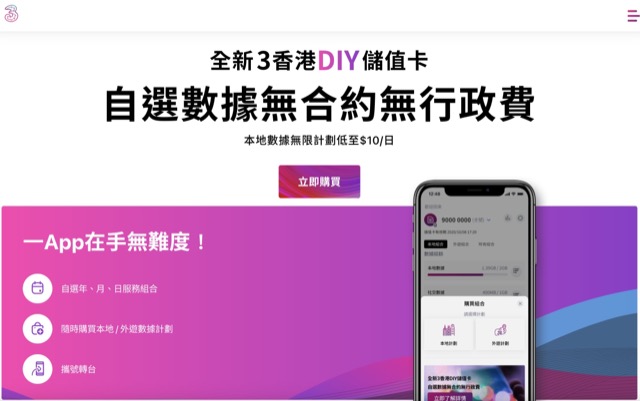
As more carriers jump on board, you’re seeing seamless native eSIM activation pop up right inside your phone’s settings. No more scanning QR codes or digging through emails—just tap a few buttons and you’re online instantly. This shift makes picking the best eSIM for travel easier because your home carrier might now offer roaming add-ons directly, bypassing third-party apps entirely. It’s a no-fuss way to get connected the moment you land.
Growing carrier support means you can activate a travel eSIM natively, often without leaving your phone’s settings—just tap and go.
Integration with travel insurance and itinerary apps
The best eSIM for travel now integrates directly with your travel insurance and itinerary apps, creating a unified trip dashboard. A single eSIM purchase can automatically populate your insurance policy and sync flight schedules into apps like TripIt, eliminating manual data entry. Seamless trip management becomes effortless as your active data plan triggers real-time coverage alerts for delays or cancellations. This connectivity ensures your insurance claims are processed faster using verified connection logs from the eSIM, while your itinerary app updates gate changes without lag. No more juggling separate logins—your eSIM becomes the persistent link between protection and planning.
Integration with travel insurance and itinerary apps means your eSIM acts as a central hub, automatically feeding policy details and live travel updates into one cohesive interface.
Potential of satellite-based eSIMs for off-grid trips
For off-grid trips, the real game-changer is the potential of satellite-based eSIMs to ditch spotty local networks entirely. Imagine hiking the Pacific Crest Trail or sailing the Atlantic without hunting for a cell tower—your phone stays connected via satellite through a simple eSIM activation. This means you can send an SOS, post a photo, or pull up a map from a remote canyon. The key perk is seamless off-grid coverage without extra hardware, though speeds may be slower than 5G for heavy streaming. It’s a practical backup for adventures where roaming simply doesn’t exist.
| Aspect | Satellite eSIM Benefit | Traditional eSIM Limit |
|---|---|---|
| Coverage area | Global, even in deserts or oceans | Requires existing cellular towers nearby |
| Setup time | Activate remotely before trip | Needs local network scanning |
| Emergency use | Reliable for SOS texts | Often fails with no signal |
